

Quilting
| BiWeeklyReviews.com participates in one or more affiliate advertising programs, including Amazon.com. As an Amazon Associate, our company earns from qualifying purchases. Click here if you wish to learn more. |
Quilting is a universal craft, practised in various forms around the world. Each region has contributed unique styles and purposes to the tradition.
Egyptian Quilts
One of the earliest examples of quilting comes from ancient Egypt, where quilted 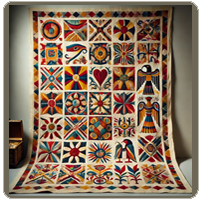 garments were used as functional clothing.
These garments, discovered in tombs, were meticulously crafted to provide warmth and durability. Egyptian quilts were less decorative compared to modern styles and focused more on utility. The stitching techniques, however, showed an advanced understanding of fabric manipulation.
Middle Eastern Quilting
Quilting in the Middle East dates back to medieval times, often linked with the creation of quilted armour.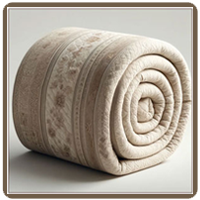
Soldiers wore padded garments beneath metal armour for comfort and protection. These "gambesons" were practical but often showcased intricate stitching patterns that hinted at an artistic touch.
Middle Eastern quilting also influenced Europe, particularly during the Crusades, when quilted techniques were adopted by returning soldiers.
Far Eastern Quilting
In regions like China and Japan, quilting evolved differently. Instead of the layered 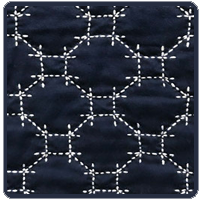 quilting seen in Europe and the Middle East, Far Eastern quilting emphasized techniques like 'Sashiko; in Japan. Sashiko involves decorative running stitches used for mending and reinforcing fabric.
These quilts often featured geometric patterns and were deeply rooted in sustainability, using every scrap of fabric to its fullest.
Chinese quilting, on the other hand, was more closely tied to embroidery, with 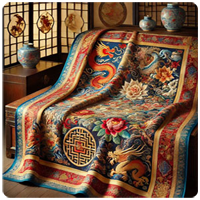 layers of fabric featuring elaborate silk thread designs depicting animals, flowers, or cultural symbols.
European Quilting
Quilting in Europe began as a luxury craft, with the earliest surviving examples featuring elaborate embroidery and expensive fabrics like silk and velvet.
Quilted bedspreads and wall hangings were common in the homes of the wealthy, particularly during the Renaissance.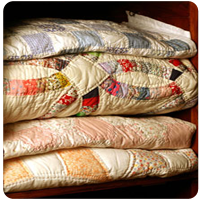
As quilting spread among common people, it became more functional. Techniques like whole-cloth quilting (using a single piece of fabric with intricate stitching patterns) and patchwork (piecing together smaller scraps) emerged.
European quilts were often heirlooms, passed down from one generation to the next, with many telling stories through their designs.
American Patchwork Quilting
American quilting, particularly during the colonial and pioneer eras, was born out of necessity. Settlers made quilts from leftover fabric scraps, creating practical items for warmth. Over time, American quilters began adding personal and cultural significance to their creations.
Distinct styles like the Log Cabin Quilt, which symbolized hearth and home, and the Crazy Quilt,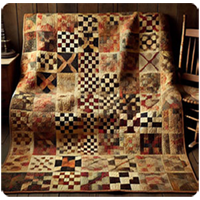 featuring irregular scraps and decorative embroidery, emerged. Quilting bees, here women gathered to work on quilts collectively, became a social tradition.
One notable aspect of American quilting is its role in history, particularly during the Underground Railroad. Some believe that quilts were used to convey secret messages, with specific patterns acting as codes for safe houses and escape routes.
The more one delves into the subject, the more fascinating facts one uncovers about this very popular craft.
Quilting is a universal craft, practised in various forms around the world. Each region has contributed unique styles and purposes to the tradition.